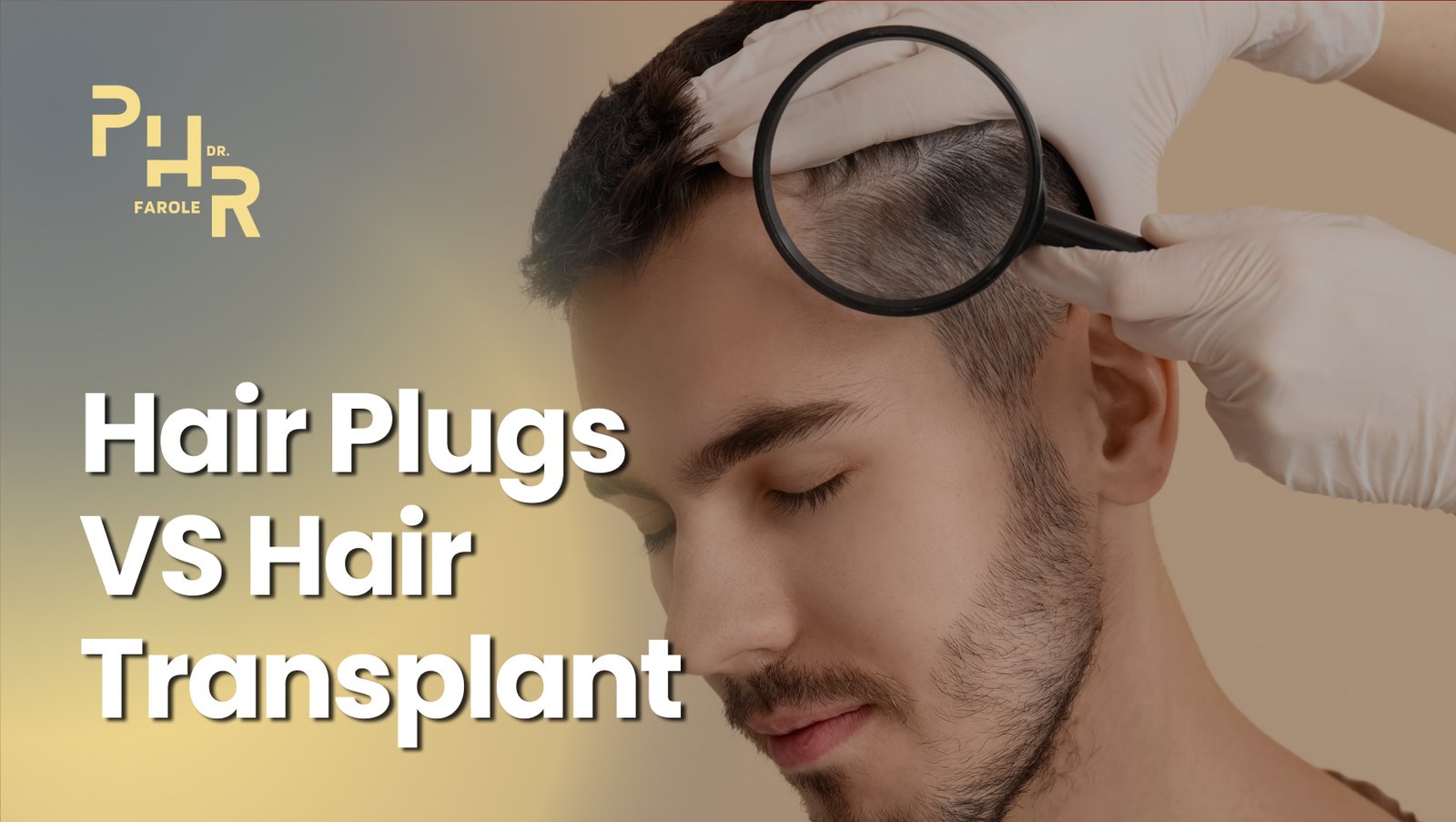
Forehead reduction can lower your hairline in just one day, but is it better than a hair transplant? In this article, we’ll talk about some of the differences between the two procedures to help you decide what’s best for your hair restoration goals. At Philadelphia Hair Restoration, we’ve helped hundreds of patients like you restore thinning or lost hair with safe, effective hair transplants.
Still not sure which option you should choose? Schedule a consultation with Philadelphia Hair Restoration to determine whether a hair transplant is right for you.
Want to learn more? Check out our videos about different hair restoration options.
What Is Forehead Reduction Surgery?
Forehead reduction surgery (also known as hairline-lowering surgery) is a surgical method used to lower the hairline, particularly when there is frontal or temporal scalp exposure.
Instead of transplanting hair follicles from a donor site into that area, this method moves the scalp that has hair downward.
Here’s how it works:
- An incision is made at the hairline, between the area with no hair and the beginning of the hairline.
- The scalp is undermined backwards.
- Another incision is often needed behind the hairline to rotate the scalp downward.
- A certain amount of forehead skin—usually not more than about 3 cm—is removed.
- The scalp above that area is rotated down to meet the incision line.
- It’s then sewn or stitched in place to bring the hairline downward.
This procedure can reduce forehead height and improve facial balance right away.
What Is a Hair Transplant?
Hair transplantation is exactly what it sounds like: taking hair from a donor site (often the back of the head, where donor hair is usually plentiful), and transplanting that hair into the areas that need it.
In the case of hair transplantation:
- The hairs would be placed in the frontal area where balding is, or in the temporal areas as well.
- We’re taking individual hair follicles and transplanting them to restore the frontal and temporal hairlines.
Differences Between Forehead Reduction and Hair Transplantation
Level of Invasiveness
- Forehead reduction is a lot more invasive than transplantation:
- We’re taking a segment of skin away between the hairline and the lower part of the forehead.
- This can be a couple of centimeters, depending on how far down we want to move the hairline.
- There’s also the stitching or sutures in place.
- It is invasive.
- Hair transplantation, especially with FUE (Follicular Unit Extraction):
- We shave the back of the head to some degree.
- We remove each follicle with a special instrument.
- It’s very non-invasive.
- The hairs are transplanted into the area of the void.
Immediate vs. Gradual Results
- One advantage of forehead reduction:
- You’re getting a lot of hair moved into the area instantly.
- With hair transplantation:
- You have to wait 6 months or more for full hair growth.
Customization and Design
- Hair transplantation allows for:
- Drawing a line for your desired contour.
- Transplanting hair to fill in that exact area.
- It’s very customized.
- Both procedures can be customized, but:
- You can do finer detail with hair transplantation that’s not available with forehead reduction.
Bleeding Risk
- With forehead reduction:
- There can be post-operative bleeding.
- We have to pay strict attention to hemostasis (reduction of blood) before the patient leaves.
- With FUE / hair transplantation:
- The risk of bleeding is very small.
- There might be some micro-bleeding, but not as much as with forehead reduction.
Can You Combine Forehead Reduction with Hair Transplantation?
Yes, you can. It’s not done very often, but it’s possible.
Example Scenario
- If the patient doesn’t have enough donor hair to fill in the entire frontal or temporal area, forehead reduction can restore the front.
- If the patient also has balding on the crown or wants some fill in the middle (parietal) area of the scalp, there may be enough donor hair at the back of the scalp to do a traditional hair transplant.
Recommended Order
- Do the forehead reduction first.
- Get that all stitched up.
- Then fill in the mid-portion with hair transplantation.
That way, there will be less disturbance of the forehead reduction if you do it in reverse order.
Which Procedure Is Right for You?
The best way to get an answer is to come in for a consultation. We can discuss the pros and cons of each procedure, and you can make your final decision based on that discussion.
Here’s a general guide to help you decide:
A hair transplant may be right for you if:
- You want a less invasive procedure with minimal downtime.
- You prefer a natural-looking, gradual result that evolves over 6–12 months.
- You have adequate donor hair, especially at the back of the scalp.
- You want to customize the shape and contour of your hairline.
- You want the flexibility to address multiple areas of thinning (e.g., frontal, temporal, and crown).
A forehead reduction may be right for you if:
- You want an immediate change to lower your high hairline.
- You have minimal donor hair, making transplantation less viable.
- You’re concerned with forehead height rather than general hair thinning.
- You’re comfortable with a more invasive surgical approach and the associated recovery.
- You do not need fine detailing along the hairline edge, and prefer a broader adjustment.
By and large, our center tends to favor hair transplantation rather than forehead reduction.
Restore Your Hairline & Your Confidence with Philadelphia Hair Restoration
Don’t let thinning hair or bald spots control your confidence anymore. With a hair transplant, Philadelphia Hair Restoration will restore the thicker, fuller hair you’ve always wanted.
Book your consultation today to meet with our specialists and find out which hair restoration method is best for you.